
Dissertation for M.D. : Spatial Patterns and Influencing Factors of Plant Phylogenetic Diversity along Urban-Rural Gradients in Shanghai, China
Abstract
Urban vegetation is the key component of urban ecosystems. Urbanization has profoundly altered the distribution patterns and plant species composition. Phylogenetic diversity is a crucial aspect of plant diversity. However, the current understanding of the impact of urbanization on the plant phylogenetic diversity and its distribution patterns remain unclear. We surveyed 134 sample plots along urban-rural gradients in the east-west and north-south directions in Shanghai, China. Five phylogenetic diversity indices were calculated at each sample point: Faith’s PD (PD), Mean pairwise distance (MPD), Mean nearest taxon distance (MNTD), Net relatedness index (NRI), and Net nearest taxon index (NTI). The proportion of urban land within a 1km radius of sample points was used as urbanization degree index. Field measurements and remote sensing data were used to obtain 17 indicators across four categories: habitat transformation, habitat fragmentation, urban environment, and human preference. Gradient analysis was employed to study the distribution patterns of phylogenetic diversity along the urban-rural gradient. Regression analysis was conducted to explore the relationship between plant phylogenetic diversity and urbanization degree. Redundancy analysis and structural equation modeling were used to analyze the relative importance and pathways of each influencing factor on plant phylogenetic diversity. The main findings are as follows:
(1) Eight spatial patterns of plant phylogenetic diversity were observed along the urban-rural gradients, including positive (linear and quadratic polynomial), negative (linear and quadratic binomial), unimodal, bimodal, intermittent, and no responses. This manifested the previous hypotheses of the spatial distribution patterns of biodiversity along urbanization gradient at the species level still hold true for phylogenetic diversity.
(2) There is a significant relationship between the urbanization degree and plant phylogenetic diversity. Different plant taxa exhibit different response patterns to urbanization. Overall, the PD of total species, woody, perennial herbaceous, and cultivated plantss increased linearly with urbanization. Conversely, the PD of annual herbaceous and spontaneous plants decreased linearly with urbanization. The MPD of total species as well as woody, perennial, and cultivated plants shows a significant linear decrease with urbanization. The urbanization degree index can explain up to 97%, 71%, and 76% of the variation in plant phylogenetic richness (PD), dispersion (MNTD and MPD), and structure (NTI and NRI), respectively.
(3) Four categories of influencing factors could explain the variation of plant phylogenetic richness, dispersion, and structure changes in 39.8%, 21.8%, and 10.0%, respectively. Human preference is the most significant factor. Habitat transformation and habitat fragmentation have the greatest impact on the structure of plant phylogenetic diversity, leading to a more clustered phylogenetic structure of plant communities in transformed and fragmented urban habitats, which may result in unstable community structures. The impact of urban environment factors on plant phylogenetic diversity is relatively minor, with only temperature, precipitation, and soil pH showing significant effects.
The findings of my research can provide insights into the understanding of mechanisms of urbanization impacts on plant diversity and the stability of plant assemblage in urban green spaces. These insights provide scientific guidelines for improving and optimizing urban plant diversity, urban greening, and urban ecosystem management.
Keywords: Urban-rural gradient, Phylogenetic diversity, Urban vegetation, Urbanization index, Structural Equation Modeling
Selected Figures
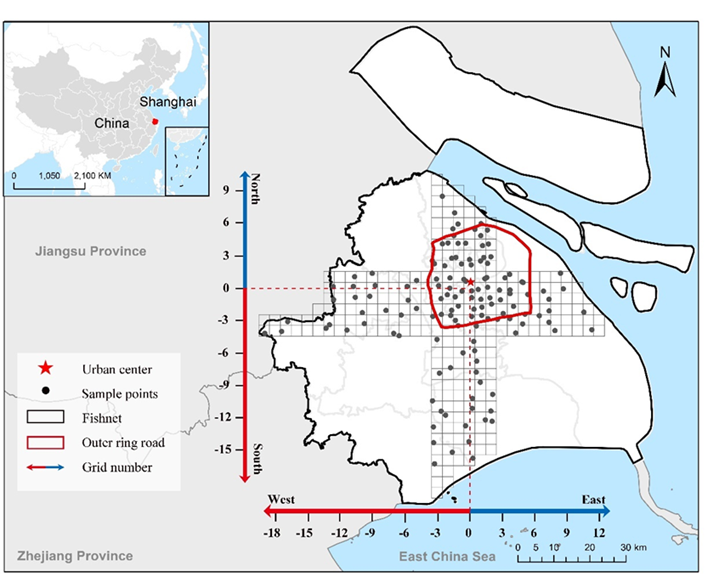 Figure 2-1. Transect and sampling point locations
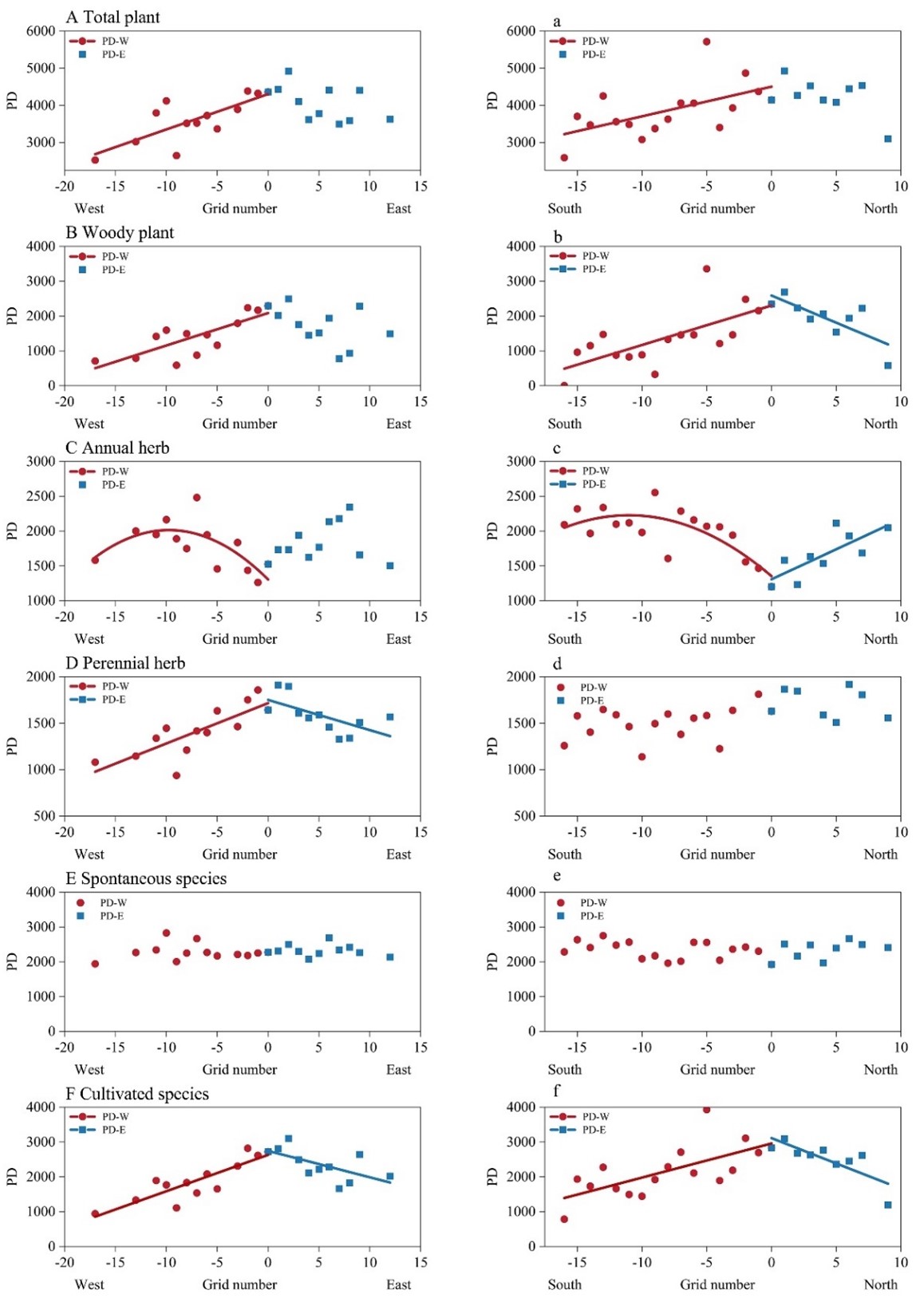 Figure 3-2. Spatial patterns of Faith’s PD of different plant taxa along urban-rural gradients
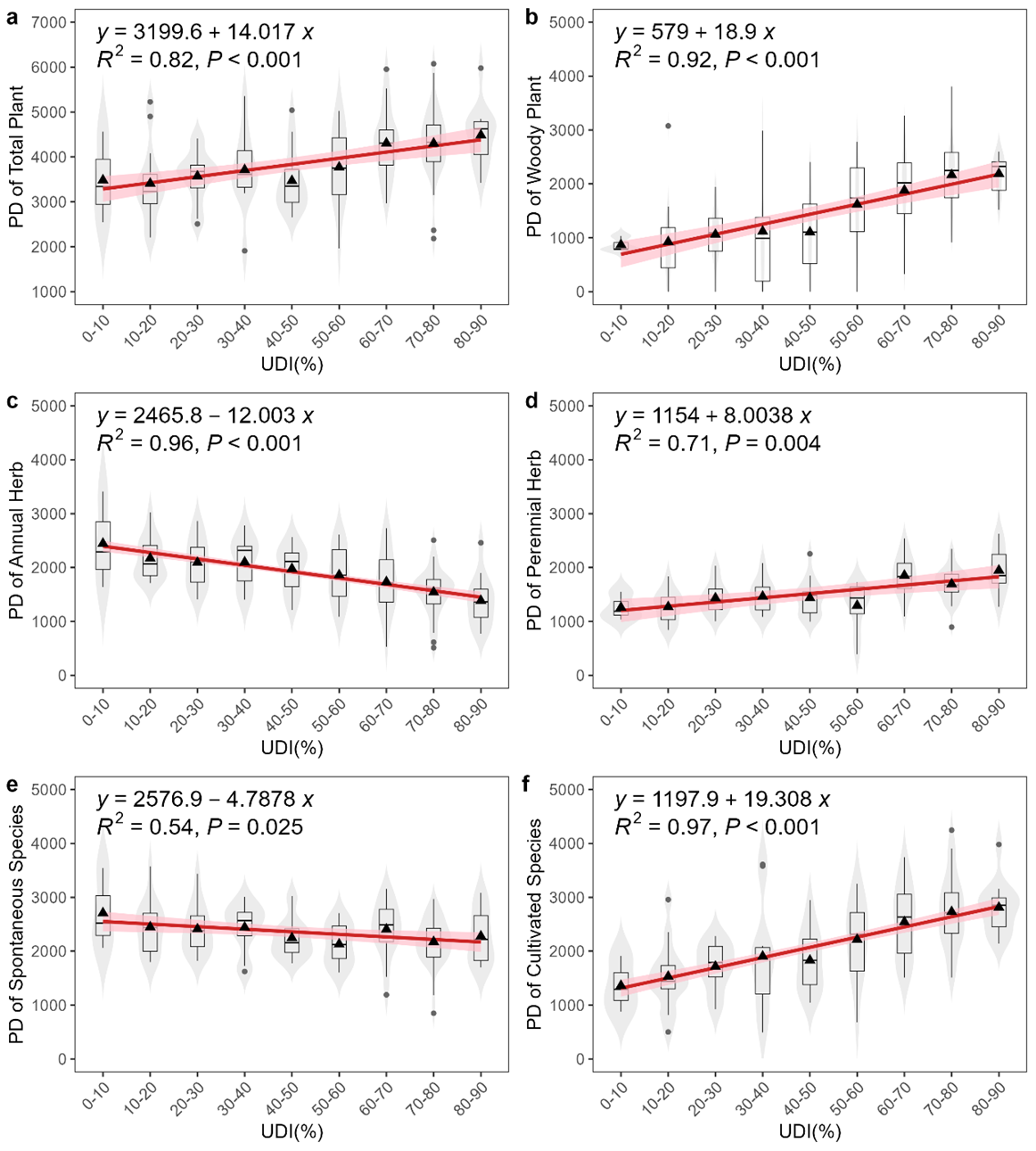 Figure 4-3. The relationship between PD and urbanization degree (UDI) for different plant taxa
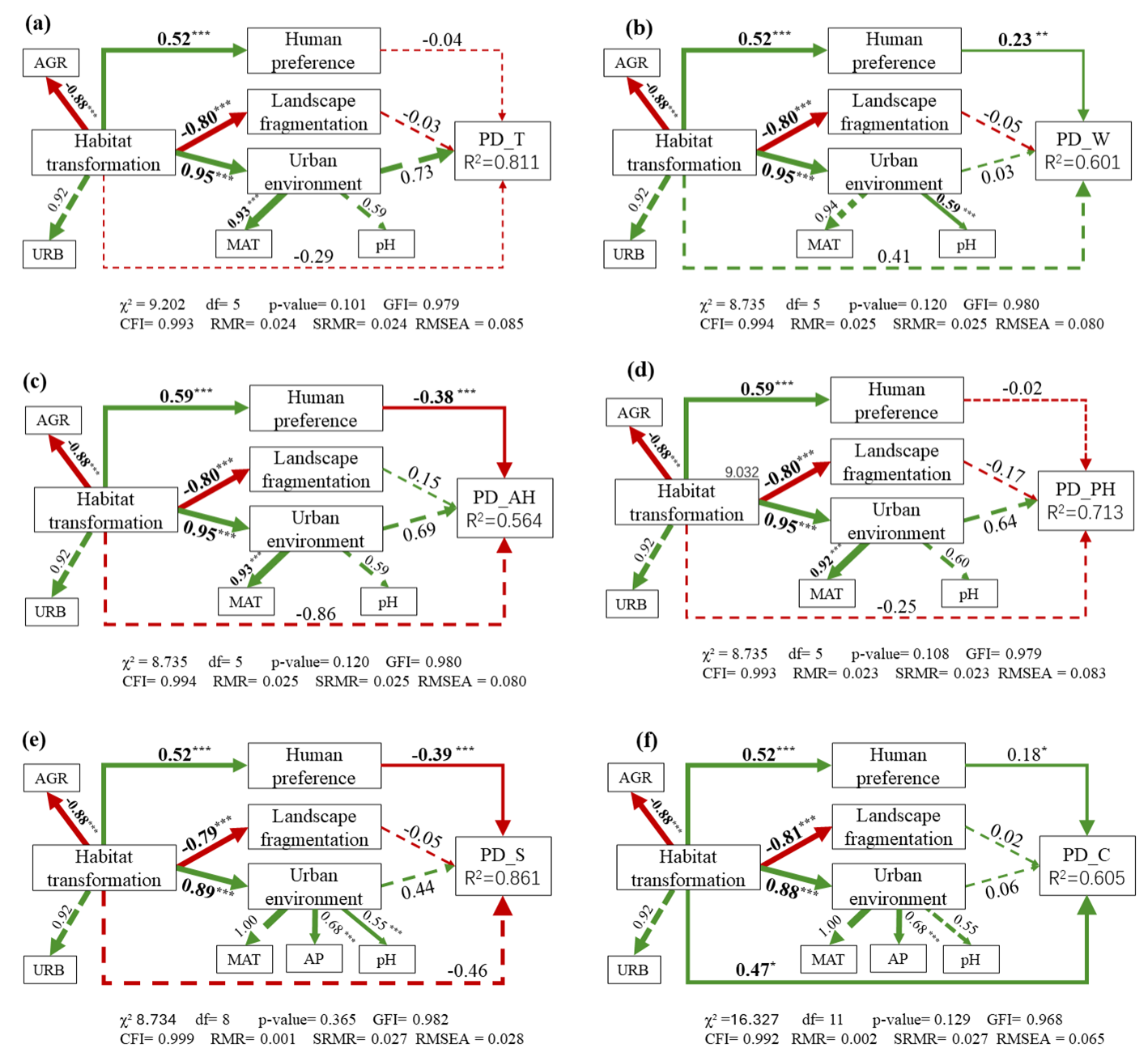 Figure 5-5 Results of Structural Equation Modeling of Urbanization Influencing Factors on PD