
Course paper: Impacts of the COVID-19 Pandemic on Spatiotemporal Characteristics of Nighttime Light Data in Shanghai
- Used NPP/VIIRS data of Shanghai from the COVID-19 pandemic outbreak stage during March to May in 2022, and analyzed spatial distribution characteristics of nighttime light data of the different stages of the pandemic
- Presented the significant changes in urban nighttime light data through the spatial distribution of nighttime light, which were closely related to the development stages of the pandemic and changes in human activities
- Demonstrated the feasibility of using nighttime light trends to reflect the impact of the pandemic on cities at the urban scale, and assisted in assessing the impact of control measures on human activities during major public health events in the post-pandemic era
- (Received an A rating in the City and Regional Planning course)
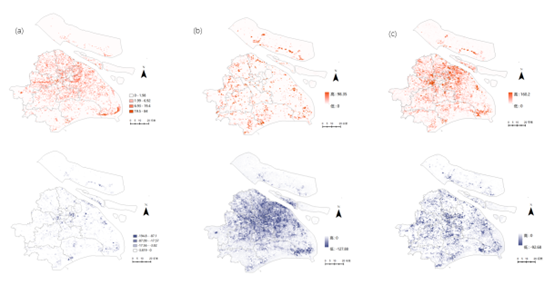
Figure 3: Temporal and Spatial Changes of Night Light Images (Red indicates increased light, Blue indicates decreased light): (a) Changes from March 2022 to December 2021 (b) Changes in April and March 2021 (c) Changes in May and April 2022
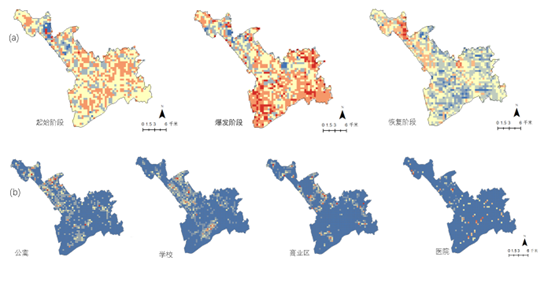 Figure 4 (a) Temporal and Spatial Changes of Night Light Images and (b) POI Map in Minhang District, Shanghai, China